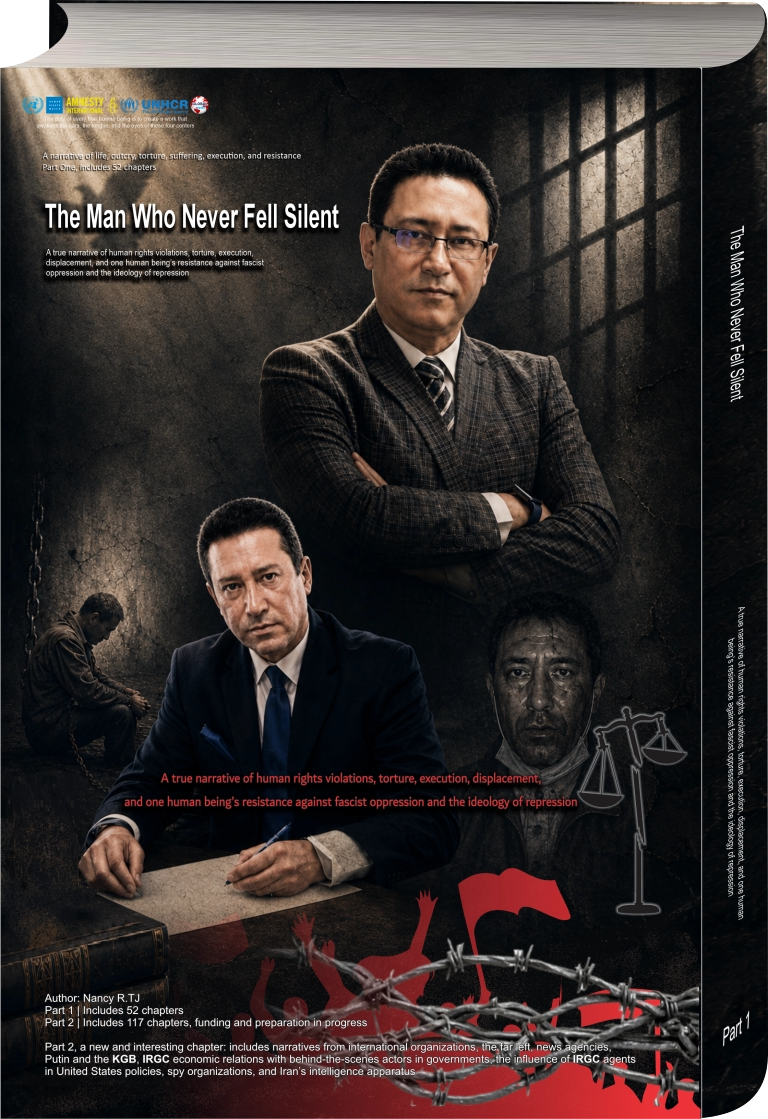
The Man Who Never Fell Silent
The documented life story of Akbar Amirzadeh Irani, recounting political imprisonment, torture allegations, exile, human rights advocacy, and resistance to repression in Iran.
VIEW BOOK
Iran
 GLOBALHUMAN RIGHTSNETWORK
Advancing human rights, dignity, and democratic freedom for people everywhere
Home DONATE
Entries are bibliographic references to published books and research, not endorsements of every author’s political position or conclusions. Access depends on the linked publisher or catalog.
The documented life story of Akbar Amirzadeh Irani, recounting political imprisonment, torture allegations, exile, human rights advocacy, and resistance to repression in Iran.

A proposal for civic resistance, a democratic transition, secular governance, and the right of Iranians to determine their political future.

The Nobel Peace Prize laureate recounts her struggle for legal accountability, the rights of women and children, and civil liberty under the Islamic Republic.
A memoir of literature, intellectual autonomy, and women’s lived experience under ideological restrictions in post-revolutionary Iran.

Family history and personal memoir set against the forces of censorship, ideological control, and political upheaval in Iran.

A warning about democratic erosion, populism, and the gradual weakening of civic institutions and freedoms.

A discussion of religious interpretation, individual liberty, pluralism, and the relationship between faith and political freedom.

A novel examining family expectations, gender, migration, identity, and the consequences of violence against women.

A collection of journalism tracking political upheaval, civic demands, and democratic aspirations in Egypt.

A firsthand account of digital organizing, popular protest, and the Egyptian revolution of 2011.

An argument for women’s bodily autonomy, equality, and resistance to gender-based restrictions.

An analysis of authoritarian power, fear, political violence, and state control in modern Iraq.

A personal memoir exploring family, power, war, silence, and the struggle for independent identity.

A survivor’s testimony describing captivity, displacement, and advocacy for justice and survivor protection.

A political and historical examination of the Syrian uprising, repression, and the ensuing conflict.
A diary-based account of protests, repression, and the human costs of the Syrian revolution.

An assessment of pluralism, democratic reform, and the institutional challenges following Arab uprisings.

Investigative reporting on honor-based violence, advocacy, and the protection of women’s rights.

Essays and personal reflections challenging restrictive stereotypes and defending women’s autonomy.

A personal account of family, Jerusalem, public life, and efforts toward peaceful coexistence.

Six walks through a changing landscape offer a personal record of history, place, and political conflict.

A memoir of challenging restrictions on women’s mobility and advocating for greater personal freedom.

An exploration of judicial independence, constitutional interpretation, and the proper role of courts in democracy.
A series of letters seeking to explain historical narratives and encourage dialogue between neighboring communities.

A study of modern Turkish politics, political leadership, institutional change, and tensions surrounding democratic governance.

A novel connecting stories across centuries through themes of love, spirituality, cultural identity, and personal transformation.
A social novel set in Cairo that explores inequality, corruption, class differences, and everyday experiences in modern Egypt.
A literary portrait of a woman’s education, identity, and relationships against the background of Egyptian and regional history.

A novel reflecting on loss, family, art, and the effects of prolonged conflict on daily life in Iraq.
An analysis of the invasion and occupation of Iraq, examining state institutions, political decisions, and postwar instability.
A darkly imaginative novel that examines violence, fragmentation, and the moral costs of conflict in Baghdad.
A firsthand account of journeys into Syria during the conflict and the experiences of civilians caught in the violence.
A personal and historical account of home, displacement, family memory, and political change in Syria.

An illustrated testimony on friendship, revolution, and survival amid the Syrian conflict.
A novel examining gender expectations, family pressures, and the lives of women and marginalized people in Amman.
A novel about a young woman’s search for her father, tracing family secrets, politics, and questions of belonging.

A documented history of Jordanian women’s organizing, legal advocacy, and movements for greater equality and participation.
Essays on belonging, collective identity, cultural difference, and the conditions that can foster conflict.
A novel about an aging woman in Beirut whose solitary life is shaped by literature, translation, and personal memory.
A physician’s memoir about devastating loss, medical work, and his advocacy for understanding across conflict lines.
An assessment of political authority, social reform, and repression in contemporary Saudi Arabia.
A study of the intersections of state power, gender norms, religion, and women’s status in Saudi Arabia.
A scholarly account of political dissent, religious discourse, and competing visions of authority in Saudi Arabia.

Two essays consider fanaticism, compromise, and approaches to resolving political conflict.
Essays on literature, imagination, civic responsibility, and the human consequences of conflict.
A legal and historical examination of human rights litigation, occupation, and the work of lawyers and advocates.

A presidential memoir covering campaigns, leadership, policy decisions, and the early years of an administration.
Reflections on American politics, democratic institutions, civic disagreement, and public responsibility.
A personal account of an American president’s upbringing, public career, presidency, and political experiences.

An assessment of prospects for Israeli-Palestinian peace and the political choices surrounding negotiations.
The former Czech president reflects on public responsibility, dissent, and the daily reality of political leadership.
Thoughts on democracy, post-communist transition, citizenship, and political ethics.
A political essay presenting the author’s ideas about public institutions, economic change, and French society.
An examination of Turkish foreign policy, regional influence, and the country’s changing political direction.
A novel exploring patriarchy, social constraints, and the experiences of women in Jordanian society.

A family saga across four generations of women confronting migration, conflict, cultural memory, and resilience.

Examines the history, ideology, leadership, regional reach, and security implications of Iran’s Revolutionary Guards.

A historical analysis of the Revolutionary Guards, tracing the organization’s religious foundations, political power, and regional operations.
A RAND study of the Revolutionary Guards’ expanding military, economic, social, and political roles within Iran.

A scholarly account of the organization’s origins, political environment, expansion, and consequences for the Middle East.

Investigates the armed organization’s recruitment, propaganda, violence, and international security implications.

An edited academic study of the state institutions and political structures sustaining the Islamic Republic of Iran.

Explores how religious and communal divisions develop, interact with political institutions, and shape regional conflicts.
Examines political institutions, state power, and the contradictions of contemporary governance in Iran.

An accessible historical overview of the uprisings, public demands, and political transformations across Arab countries.

Traces human rights debates and the political and social changes associated with the Arab uprisings.

Analyzes the uprisings and challenges confronting democratization, political movements, and regional governance.
A historical introduction to Iran’s intelligence ministry and its development within the state security apparatus.

Investigative reporting on covert conflict, intelligence activity, and geopolitical confrontation involving Iran.

Examines violations of human rights in Iran and challenges arguments used to excuse abuses through cultural relativism.

A newly published account of the January 2026 protests in Iran, including questions about casualties, censorship, and documentary evidence.

Discusses successive protest movements and the pressures on political legitimacy in Iran. The listed author name is a publishing pseudonym and requires further identity verification.

A reported history following several Iranian lives over five decades of political change and resistance; not an exclusive record of the 2025–2026 protests.

Studies how successive U.S. administrations approached Iran and the foreign policy debates surrounding those decisions.

Examines American diplomatic outreach to Iran during the first Obama administration and the author’s interpretation of negotiations.

Presents the author’s account of negotiations over Iran’s nuclear program and the resulting diplomatic agreement.

A historical analysis of Iranian left-wing movements and their political trajectory before and after the 1979 revolution.

A personal and scholarly reflection on revolutionary activism, contested ideas, and the outcome of Iran’s 1979 revolution.

Examines national narrative, cultural memory, women’s literature, and the civic imagination behind Iranian resistance.

Analyzes relations between Iran and Turkey and the countries’ roles within the wider regional order.

Compares institutions that claim to protect state ideologies in Turkey and Iran, and the consequences for democratic contestation.

An edited study of regional interaction among Turkey, Russia, and Iran and their evolving geopolitical roles.

First published in 1988, this novel became the subject of a death fatwa issued against its author by Ruhollah Khomeini on 14 February 1989. A landmark case in debates over freedom of expression, censorship, and religious authority.