Introduction
Human rights in Yemen are seen as problematic. The security forces have been responsible for torture, inhumane treatment and even extrajudicial executions. In recent years there has been some improvement, with the government signing several international human rights treaties, and even appointing a woman, Dr. Wahiba Fara’a, to the role of Minister of the State of Human Rights. Other sources state that many problems persist alongside allegations that these reforms have not been fully implemented and that abuses still run rampant, especially in the areas of women's rights, freedom of the press, torture and police brutality. There are arbitrary arrests of citizens as well as arbitrary searches of homes.
Prolonged pretrial detention is a serious problem, and judicial corruption, inefficiency, and executive interference undermine due process. Freedom of speech, the press and religion are all restricted. In 2018 and 2019, numerous sources, including the United Nations described the human rights situation in Yemen as being the worst in the world.
Treaties
Yemen is a party to the following human rights agreements:
- The Convention on the Elimination of Discrimination Against Women (CEDAW)
- The Convention Relating the Status of Refugees
- The Convention on the Elimination of Racial Discrimination
- The International Covenant on Civil and Political Rights
- The International Covenant on Economic, Social and Cultural Rights
- The International Convention on the Ban of Genocide
- The International Convention on War Crimes and Crimes Against Humanity
- The International Convention on Women's Political Rights
- The Convention on Marriage Consent and Minimum Marriage Age and Marriage Contracts Registration
- The Convention on the Ban of Human Trading and Exploitation
- The International Convention on the Prohibition of Racial Discrimination
- The International Convention on the Rights of the Child
- The International Convention on Anti-Torture, Cruel Treatment and Inhumanity
- The 1994 Geneva Agreement and their 1997 Annexed Protocol
Women's rights
Despite the Yemeni Constitution of 1994, which stipulates equal rights for Yemeni citizens, women are still struggling with various constraints and secondary status. Yemen's Personal Status Law in particular, which covers matters of marriage, divorce, child custody and inheritance, gives women fewer rights than men, excludes women from decision making, and deprives them of access to, and control over, resources and assets. The right to divorce is not given to women equally. It is far more difficult for a woman to divorce a man. A man may divorce a woman at will. While a man may divorce without justifying his action in court, a woman must present adequate justification.
Women face many practical, social, and financial negative considerations in the divorce procedure. One significant case to gain worldwide publicity was that of Nujood Ali, who succeeded in obtaining a divorce at age ten, with the help of a prominent female Yemeni lawyer who agreed to represent her. Yemen has one of the worst records of child marriage in the world, with UNICEF recording in 2005 that 48.4% of Yemeni women currently aged 20–24 had been married before they were 18 (and 14% before the age of 15). Prior to the unification of Yemen in 1990, the law set the minimum age of marriage at 16 in South Yemen and 15 in the north. After unification, the law was set at 15. In 1999, the civil status law was amended and the minimum age was abolished.
In April 2010, a controversial new law set the minimum age for marriage at 17. The bill was actively opposed by conservative parliamentarians on the basis that fixing a minimum age of marriage contradicts Islam. Other factors contributing to child marriage include embedded cultural traditions, economic pressures on girls' parents, and the value placed on young girls' virginity and the consequent desire to protect them from sexual relationships outside of marriage. Other potential factors include older husbands' desire for young, submissive wives, and the belief that young girls are less likely to be carriers of HIV and AIDS.
The dangers of early marriage to girls include the increased health risks associated with early pregnancies, social isolation, an increased risk of exposure to domestic violence and a cutting short of girls' education, further contributing to the 'feminisation of poverty'. Women's access to maternal health care is severely restricted. In most cases, husbands decide women's fertility. It is hard for women to obtain contraception, or to take an operation for treatment without a husband's permission. Yemen's high child mortality rate and the fourth fastest growing population in the world are attributed to a lack of women's decision-making in their pregnancy and access to healthcare services.
Women are vulnerable to sexual assault by prison guards, and there is a lower, if any, punishment for violence against women than men. The law stipulates protection of women from domestic violence, but in fact there are few protections for women who suffer from domestic violence and no systematic investigation of such occurrences has been conducted. Spousal abuse or domestic violence is not generally reported to the police because of social norms and customs, meaning that women remain silent under these abuses.
Freedom of the press
In 2005, Yemen ranked 136th of 167 nations in terms of press freedom. The government holds a monopoly on all television and radio and bans journalists for publishing "incorrect" information. In 2001, journalists at the newspaper Al-Shura received 80 lashes for defaming Abdul Majeed al-Zindani, the leader of the country's largest Islamist party. The newspaper was also shut down.
According to Human Rights Watch, "Under the regulations for the 1990 Press Law, issued in 1993 and 1998, newspapers have to apply to the Ministry of Information for annual renewal of their license... in mid-2000 only about half of Yemen's 200 publications had been granted a license." The UN Human Rights Office (OHCHR) documented several human rights violations against journalists in Yemen that included killings, disappearances and death sentences committed by the parties warring in the Yemeni armed conflict. On June 2, 2020, in Dar Sa’ad district, AFP journalist Nabeel Al-Qitee’e was assassinated in front of his home.
On 11 April 2020, four journalists were sentenced to death and six others were jailed by the Specialized Criminal Court in the capital of Sana’a, controlled by Houthi rebels. Since the start of the conflict in 2015, 24 media organizations have been seized, 26 TV channels and newspaper agencies were shut down. According to OHCHR, 357 human rights violations and abuses were documented to have taken place against journalists, including 184 arrests and detentions, 28 killings, 45 assaults, 2 forced disappearances and one abduction. On 6 November 2020, Human Rights Watch revealed that four journalists arbitrarily detained by Houthi authorities in Yemen since 2015 were charged with death penalty and given inadequate medical care during imprisonment.
The four detainees were arrested and sentenced to death without a fair trial on 11 April 2020, by a Houthi-controlled court in Sanaa. The court charged the journalists for treason and spying for foreign states considering their journalistic work. In September 2025, a lawyer known for representing detained journalists, Abdulmajid Sabra, was himself detained. He remains imprisoned without charge as of September 2026.
Freedom of religion
The Constitution provides for freedom of religion, and the Government generally respected this right in practice; however, there were some restrictions. The Constitution declares that Islam is the state religion, and that Shari'a (Islamic law) is the source of all legislation. Government policy continued to contribute to the generally not free practice of religion; however, there were some restrictions. Muslims and followers of religious groups other than Islam are free to worship according to their beliefs, but the Government prohibits conversion from Islam and the proselytization of Muslims.
Although relations among religious groups continued to contribute to religious freedom, there were some reports of societal abuses and discrimination based on religious belief or practice. There were isolated attacks on Jews and some prominent Zaydi Muslims felt targeted by government entities for their religious affiliation. Government military reengagement in the Saada governorate caused political, tribal, and religious tensions to reemerge in January 2007, following the third military clash with rebels associated with the al-Houthi family, who adhere to the Zaydi school of Shi'a Islam. Since the start of the Shia insurgency, many Zaidis accused of supporting Al-Houthi, have been arrested and held without charge or trial.
According to the US Department of State, International Religious Freedom Report 2007, "Some Zaydis reported harassment and discrimination by the Government because they were suspected of sympathizing with the al-Houthis. However, it appears the Government's actions against the group were probably politically, not religiously, motivated".
LGBT rights
Homosexuality is illegal in Yemen in accordance with the country's Shari'ah legal system. LGBT persons in Yemen are likely to suffer discrimination, legal, and social challenges. Punishments for homosexuality range from flogging to death. Yemen is one of the seven countries to apply a death penalty for consensual sexual acts between adults of the same sex. Gay and lesbian websites are blocked by the government. The official position is that there are no gays in Yemen. As of 2007, there was no public or semi-public space for gays as in western countries. As a result of Sharia, LGBT people are killed in attacks.
Human trafficking
The United States Department of State 2013 Trafficking in Persons report has classified Yemen as a Tier 3 country, meaning that its government does not fully comply with the minimum standards against human trafficking and is not making significant efforts to do so.
Violations of children's rights during civil war
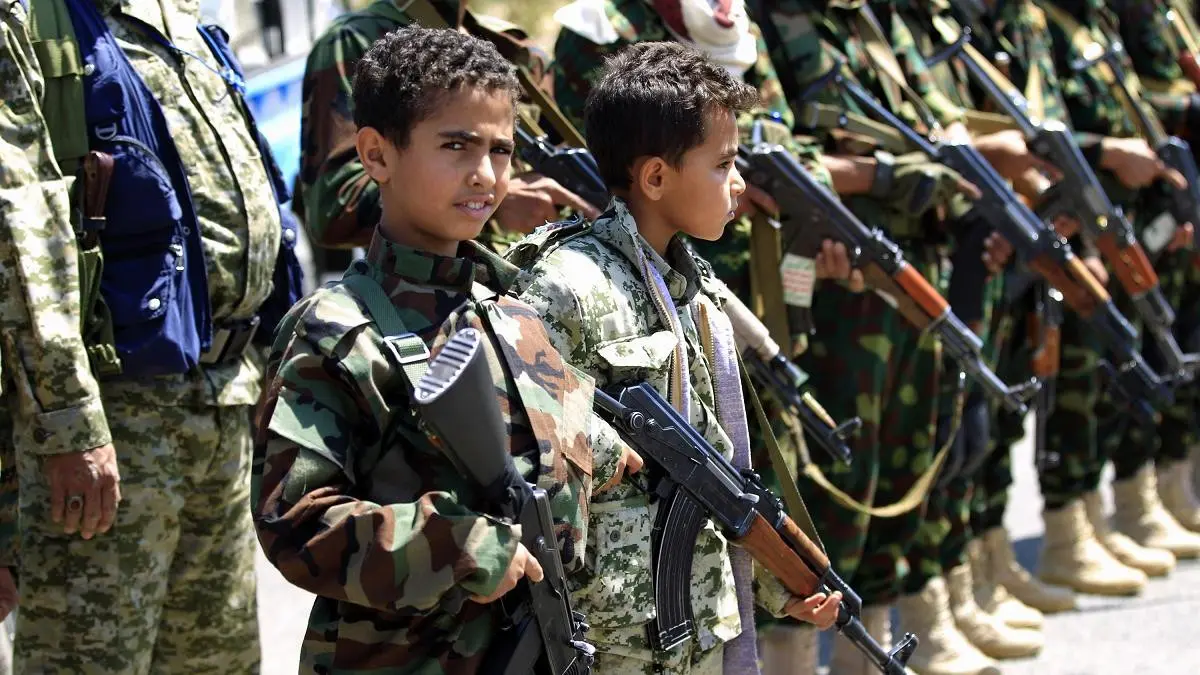
Amnesty International denounced the recruitment of young boys under the age of 17 at hands of the Yemen's Houthi armed group to fight as child soldiers on the front lines of the Yemeni Civil War. In mid-February 2017, four boys, aged between 15 and 17, were recruited by Huthis in Sana'a; the total numbers of the boys recruited is unknown. Since the children have been excited to shoot Kalashnikovs and guns and wear military uniforms, Houthis have run local centers that hold activities such as prayers, sermons and lectures where they have been encouraged to join front-line battles to defend Yemen against Saudi Arabia.
As the report clarified, they always take one recruit from each family; and when son dies, a monthly salary, estimated between 20,000 and 30,000 Yemeni Riyals, has been given to the family. According to the UN agencies, nearly 1,500 cases of children were recruited by all parties to the conflict since March 2015. Saudi Arabia and the United Arab Emirates hired child soldiers from Sudan (especially from Darfur), and Yemen to fight against Houthis during the Yemeni Civil War (2015-present). British SAS special forces are allegedly involved in training child soldiers in Yemen. Reportedly at least 40% of soldiers fighting for the Saudi-led coalition are children. Saudi Arabia is also hiring Yemeni child soldiers to guard Saudi border against Houthis.
In June 2019, Mike Pompeo, the US Secretary of State, blocked the inclusion of Saudi Arabia on the US list of countries that recruit child soldiers, dismissing his experts' findings that a Saudi-led coalition has been using children in Yemen's civil war.
Labor
Since 2015 the ILO works with the United Nations Development Programme (UNDP) to create new jobs and generate income in Yemen. The World Bank, UN, European Union and Islamic Development Bank joined the ILO in order to arrange multiple Damage and Needs Assessment (DNA) reports. The ILO implemented the Labour Market Information System in collaboration with the Ministry of Social Affairs and Labour to support employment policy funded by Silatech of Qatar, Swiss Agency for Development and Cooperation (SDC) and ILO funds. The projects “Entrepreneurship education- Know about business” and “Women Entrepreneurship Programme in Yemen” were financed by the Social Fund for Development to provide access to fundamental business skills.
In addition, the ILO partnered with the UNDP to support the access to work for young people and implement the project “Livelihood and Economic Recovery”.
Secret prisons
The UAE runs secret prisons in Yemen where prisoners are forcibly disappeared and tortured. The US also admitted to interrogating prisoners but denied "any participation in or knowledge of human rights abuses".
Houthi-controlled Yemen

Human rights in Yemen are seen as problematic. The security forces have been responsible for torture, inhumane treatment and even extrajudicial executions. In recent years there has been some improvement, with the government signing several international human rights treaties, and even appointing a woman, Dr. Wahiba Fara’a, to the role of Minister of the State of Human Rights. Other sources state that many problems persist alongside allegations that these reforms have not been fully implemented and that abuses still run rampant, especially in the areas of women's rights, freedom of the press, torture and police brutality. There are arbitrary arrests of citizens as well as arbitrary searches of homes.
Prolonged pretrial detention is a serious problem, and judicial corruption, inefficiency, and executive interference undermine due process. Freedom of speech, the press and religion are all restricted. In 2018 and 2019, numerous sources, including the United Nations described the human rights situation in Yemen as being the worst in the world.
Treaties
Yemen is a party to the following human rights agreements:
- The Convention on the Elimination of Discrimination Against Women (CEDAW)
- The Convention Relating the Status of Refugees
- The Convention on the Elimination of Racial Discrimination
- The International Covenant on Civil and Political Rights
- The International Covenant on Economic, Social and Cultural Rights
- The International Convention on the Ban of Genocide
- The International Convention on War Crimes and Crimes Against Humanity
- The International Convention on Women's Political Rights
- The Convention on Marriage Consent and Minimum Marriage Age and Marriage Contracts Registration
- The Convention on the Ban of Human Trading and Exploitation
- The International Convention on the Prohibition of Racial Discrimination
- The International Convention on the Rights of the Child
- The International Convention on Anti-Torture, Cruel Treatment and Inhumanity
- The 1994 Geneva Agreement and their 1997 Annexed Protocol
Women's rights
Despite the Yemeni Constitution of 1994, which stipulates equal rights for Yemeni citizens, women are still struggling with various constraints and secondary status. Yemen's Personal Status Law in particular, which covers matters of marriage, divorce, child custody and inheritance, gives women fewer rights than men, excludes women from decision making, and deprives them of access to, and control over, resources and assets. The right to divorce is not given to women equally. It is far more difficult for a woman to divorce a man. A man may divorce a woman at will. While a man may divorce without justifying his action in court, a woman must present adequate justification.
Women face many practical, social, and financial negative considerations in the divorce procedure. One significant case to gain worldwide publicity was that of Nujood Ali, who succeeded in obtaining a divorce at age ten, with the help of a prominent female Yemeni lawyer who agreed to represent her. Yemen has one of the worst records of child marriage in the world, with UNICEF recording in 2005 that 48.4% of Yemeni women currently aged 20–24 had been married before they were 18 (and 14% before the age of 15). Prior to the unification of Yemen in 1990, the law set the minimum age of marriage at 16 in South Yemen and 15 in the north. After unification, the law was set at 15. In 1999, the civil status law was amended and the minimum age was abolished.
In April 2010, a controversial new law set the minimum age for marriage at 17. The bill was actively opposed by conservative parliamentarians on the basis that fixing a minimum age of marriage contradicts Islam. Other factors contributing to child marriage include embedded cultural traditions, economic pressures on girls' parents, and the value placed on young girls' virginity and the consequent desire to protect them from sexual relationships outside of marriage. Other potential factors include older husbands' desire for young, submissive wives, and the belief that young girls are less likely to be carriers of HIV and AIDS.
The dangers of early marriage to girls include the increased health risks associated with early pregnancies, social isolation, an increased risk of exposure to domestic violence and a cutting short of girls' education, further contributing to the 'feminisation of poverty'. Women's access to maternal health care is severely restricted. In most cases, husbands decide women's fertility. It is hard for women to obtain contraception, or to take an operation for treatment without a husband's permission. Yemen's high child mortality rate and the fourth fastest growing population in the world are attributed to a lack of women's decision-making in their pregnancy and access to healthcare services.
Women are vulnerable to sexual assault by prison guards, and there is a lower, if any, punishment for violence against women than men. The law stipulates protection of women from domestic violence, but in fact there are few protections for women who suffer from domestic violence and no systematic investigation of such occurrences has been conducted. Spousal abuse or domestic violence is not generally reported to the police because of social norms and customs, meaning that women remain silent under these abuses.
Freedom of the press
In 2005, Yemen ranked 136th of 167 nations in terms of press freedom. The government holds a monopoly on all television and radio and bans journalists for publishing "incorrect" information. In 2001, journalists at the newspaper Al-Shura received 80 lashes for defaming Abdul Majeed al-Zindani, the leader of the country's largest Islamist party. The newspaper was also shut down.
According to Human Rights Watch, "Under the regulations for the 1990 Press Law, issued in 1993 and 1998, newspapers have to apply to the Ministry of Information for annual renewal of their license... in mid-2000 only about half of Yemen's 200 publications had been granted a license." The UN Human Rights Office (OHCHR) documented several human rights violations against journalists in Yemen that included killings, disappearances and death sentences committed by the parties warring in the Yemeni armed conflict. On June 2, 2020, in Dar Sa’ad district, AFP journalist Nabeel Al-Qitee’e was assassinated in front of his home.
On 11 April 2020, four journalists were sentenced to death and six others were jailed by the Specialized Criminal Court in the capital of Sana’a, controlled by Houthi rebels. Since the start of the conflict in 2015, 24 media organizations have been seized, 26 TV channels and newspaper agencies were shut down. According to OHCHR, 357 human rights violations and abuses were documented to have taken place against journalists, including 184 arrests and detentions, 28 killings, 45 assaults, 2 forced disappearances and one abduction. On 6 November 2020, Human Rights Watch revealed that four journalists arbitrarily detained by Houthi authorities in Yemen since 2015 were charged with death penalty and given inadequate medical care during imprisonment.
The four detainees were arrested and sentenced to death without a fair trial on 11 April 2020, by a Houthi-controlled court in Sanaa. The court charged the journalists for treason and spying for foreign states considering their journalistic work. In September 2025, a lawyer known for representing detained journalists, Abdulmajid Sabra, was himself detained. He remains imprisoned without charge as of September 2026.
Freedom of religion
The Constitution provides for freedom of religion, and the Government generally respected this right in practice; however, there were some restrictions. The Constitution declares that Islam is the state religion, and that Shari'a (Islamic law) is the source of all legislation. Government policy continued to contribute to the generally not free practice of religion; however, there were some restrictions. Muslims and followers of religious groups other than Islam are free to worship according to their beliefs, but the Government prohibits conversion from Islam and the proselytization of Muslims.
Although relations among religious groups continued to contribute to religious freedom, there were some reports of societal abuses and discrimination based on religious belief or practice. There were isolated attacks on Jews and some prominent Zaydi Muslims felt targeted by government entities for their religious affiliation. Government military reengagement in the Saada governorate caused political, tribal, and religious tensions to reemerge in January 2007, following the third military clash with rebels associated with the al-Houthi family, who adhere to the Zaydi school of Shi'a Islam. Since the start of the Shia insurgency, many Zaidis accused of supporting Al-Houthi, have been arrested and held without charge or trial.
According to the US Department of State, International Religious Freedom Report 2007, "Some Zaydis reported harassment and discrimination by the Government because they were suspected of sympathizing with the al-Houthis. However, it appears the Government's actions against the group were probably politically, not religiously, motivated".
LGBT rights
Homosexuality is illegal in Yemen in accordance with the country's Shari'ah legal system. LGBT persons in Yemen are likely to suffer discrimination, legal, and social challenges. Punishments for homosexuality range from flogging to death. Yemen is one of the seven countries to apply a death penalty for consensual sexual acts between adults of the same sex. Gay and lesbian websites are blocked by the government. The official position is that there are no gays in Yemen. As of 2007, there was no public or semi-public space for gays as in western countries. As a result of Sharia, LGBT people are killed in attacks.
Human trafficking
The United States Department of State 2013 Trafficking in Persons report has classified Yemen as a Tier 3 country, meaning that its government does not fully comply with the minimum standards against human trafficking and is not making significant efforts to do so.
Violations of children's rights during civil war
Amnesty International denounced the recruitment of young boys under the age of 17 at hands of the Yemen's Houthi armed group to fight as child soldiers on the front lines of the Yemeni Civil War. In mid-February 2017, four boys, aged between 15 and 17, were recruited by Huthis in Sana'a; the total numbers of the boys recruited is unknown. Since the children have been excited to shoot Kalashnikovs and guns and wear military uniforms, Houthis have run local centers that hold activities such as prayers, sermons and lectures where they have been encouraged to join front-line battles to defend Yemen against Saudi Arabia.
As the report clarified, they always take one recruit from each family; and when son dies, a monthly salary, estimated between 20,000 and 30,000 Yemeni Riyals, has been given to the family. According to the UN agencies, nearly 1,500 cases of children were recruited by all parties to the conflict since March 2015. Saudi Arabia and the United Arab Emirates hired child soldiers from Sudan (especially from Darfur), and Yemen to fight against Houthis during the Yemeni Civil War (2015-present). British SAS special forces are allegedly involved in training child soldiers in Yemen. Reportedly at least 40% of soldiers fighting for the Saudi-led coalition are children. Saudi Arabia is also hiring Yemeni child soldiers to guard Saudi border against Houthis.
In June 2019, Mike Pompeo, the US Secretary of State, blocked the inclusion of Saudi Arabia on the US list of countries that recruit child soldiers, dismissing his experts' findings that a Saudi-led coalition has been using children in Yemen's civil war.
Labor
Since 2015 the ILO works with the United Nations Development Programme (UNDP) to create new jobs and generate income in Yemen. The World Bank, UN, European Union and Islamic Development Bank joined the ILO in order to arrange multiple Damage and Needs Assessment (DNA) reports. The ILO implemented the Labour Market Information System in collaboration with the Ministry of Social Affairs and Labour to support employment policy funded by Silatech of Qatar, Swiss Agency for Development and Cooperation (SDC) and ILO funds. The projects “Entrepreneurship education- Know about business” and “Women Entrepreneurship Programme in Yemen” were financed by the Social Fund for Development to provide access to fundamental business skills.
In addition, the ILO partnered with the UNDP to support the access to work for young people and implement the project “Livelihood and Economic Recovery”.
Secret prisons
The UAE runs secret prisons in Yemen where prisoners are forcibly disappeared and tortured. The US also admitted to interrogating prisoners but denied "any participation in or knowledge of human rights abuses".
- Democracy in the Middle East and North Africa
- Elections in Yemen
- Hooria Mashhour, former Minister of Human Rights
- Human rights in the Middle East
- Human rights in Islamic countries
March 2015
On 26 March, Interior Ministry officials linked to Ansar Allah documented that 23 civilians had been killed and 24 wounded. Among the dead were 5 children, ages 2 to 13, 6 women and an elderly man. The wounded included 12 children, ages 3 to 8, and 2 women due to airstrike against Sanaʽa particularly in Bani Hawat, a predominantly Houthi neighborhood near Sanaa's airports and al-Nasr, near the presidential palace. HRW documented the deaths of 11 civilians, including 2 women and 2 children, other than those provided by the Yemeni officials along with 14 more wounded, including 3 children and 1 woman. According to AI, that bombing destroyed at least 14 homes in Bani Hawat.
On 31 March, OCHA reported that 13 of 22 Governorates were affected and highlighted infrastructure effects that detailed coalition bombing of a refugee camp that killed 29 and injured 40. Fuel shortages in the south threatened water access to citizens and in Lahj, electricity and water services had not been functioning for several days. Later that day, AI reported that at least six civilians, including four children, were burned to death as a result of an airstrike. It reported that two fuel stations were destroyed. In al-Kadima area in al-Kita, several passengers were killed in a car that had stopped to refuel and a worker was injured. The third strike, apparently aimed at a passing fuel tanker, set fire to at least three civilian homes.
AI then stated that "it is becoming increasingly apparent that the Saudi Arabian–led coalition is turning a blind eye to civilian deaths and suffering caused by its military intervention."
April
On 17 April, OCHA reported on the increasing deterioration of the humanitarian situation, reporting airstrikes hitting in Saada City a water tank, the electricity station, a petrol station, a plastics processing factory, a shopping centre and a housing complex. Several days earlier, airstrikes had hit private homes, the post office, a community centre, government offices, markets and vehicles. Local partners estimated about 50 dead within the past week. In Sanaʽa residential neighborhoods near Assir, Ayban and Faj Attan were affected due to their proximity to military camps. In Amran, airstrikes hit a petrol station, an educational institute and a bridge. According to local reports, a local water corporation in Hajjah (Abbs District) was hit.
The report also stated that civilian casualties were under-reported as families without access to hospitals bury their members at home. On 20 April coalition airstrikes hit the Fajj Atan military base, causing a large explosion that killed 38 civilians and injured over 500. The airstrike also targeted the office of Yemen Today, a TV network owned by Ali Abdullah Saleh, killing three and injuring other workers. An eyewitness reported that emergency rooms were overwhelmed. The head of the ICRC in Yemen later clarified that 90 people had died during this attack. On 21 April the BBC reported a warning from the UN about worsening health services and a dire need for medicines.
On 24 April UNICEF released a report stating that since the start of the military intervention, 115 children had been killed, with at least 64 from aerial bombardment. The F-15's of Saudi Arabia often strike militia holdouts that miss and hit shelters the homeless and houses. According to OCHA's fifth report, released on 26 April, humanitarian operations would come to a complete halt within two weeks and hospitals in both Sanaa and Aden would close completely due to the lack of fuel. The lack of fuel affected water supplies. Markets in affected governorates are not able to provide food, with wheat grain and flour prices rising by 42% and 44%, respectively.
The healthcare system faced an imminent collapse with hospitals struggling to operate due to lack of medicines and supplies. Essential medicine prices increased by 300%. Casualties from 19 March to 22 April reached 1,080 (28 children and 48 women) and 4,352 wounded (80 children and 143 women). According to the WFP, 12 million people were food insecure, a 13% rise. On 29 April OCHA reported that airstrikes hit SIA on 28 April, damaging the runway and hampering aid deliveries. Airstrikes were also reported at Al Hudayda Airport and Saada. Widespread internet and phone disruptions were reported in several governorates due to the lack of fuel and electricity.
On 25 April, the Yemen Public Telecommunications Corporation warned that unless the fuel crisis was resolved, telecommunication services (mobile phones, internet, and land lines) would shut down within a week. The disruption in communication was affecting information flow on humanitarian needs and operations. On 29 April, Haradh was heavily bombarded, including areas near the main hospital. Food distribution and aid would reportedly stop within a week if additional fuel could not be obtained. As of 29 April the Al Hudaydah Governorate ran out of fuel and aid operations could not be completed. On 30 April OCHA's Flash Update 22 reported that airstrikes hit the only main roads that connect the Sanaʽa Governorate with Ibb.
It also indicated that over 3,410 people from Yemen had arrived in Somalia since the fighting escalated, with 2,285 arrivals registered in Puntland and 1,125 registered in the Somaliland. A further 8,900 migrants were registered in Djibouti, 4,700 of whom were third country nationals.
May
On 4 May coalition airstrikes hit SIA, destroying a cargo ship and other planes used to transport food and supplies. OCHA reported that several airstrikes hit the Al Hudayda airport and surrounding areas in Al Hudayda City. In Aden, the districts of Craiter and Al-Muala were without electricity, water and telecommunication for over a week according to residents. That same day, Johannes van der Klaauw, OCHA's Humanitarian Coordinator for Yemen, urged the coalition to stop targeting Sana'a International Airport and to preserve airports and seaports so that humanitarian aid could reach people affected by the conflict.
On 5 May, a UN spokesperson emphasized the effects on persons with disabilities stating that over 3,000,000 people with disabilities could not meet their basic needs. The conflict forced more than 300 centres to close. She added that they were especially concerned about an airstrike that targeted a military field hospital. On 6 May, the OCHA reported lack of fuel to support humanitarian operations beyond one week, with fuel and food prices continuing to increase. The World Food Programme declared that shortages of fuel has changed to a serious threat for hospitals and food supplies. Edward Santiago, country director for Save the Children, said in statement a short time ceasefire is not enough to allow for humanitarian supplies.
On 7 May, trade sources stated that merchant ships had been delayed weeks Yemen and in one case, following inspection and approval, a food supply ship was denied access. The food crisis increased to include over 20 million people (80% of the population) going hungry. Airstrikes destroyed a mine factory and a communications center. Local sources reported that 13 villagers were killed due to shelling near the border. On 18 May, HRW documented airstrikes that hit homes and markets and killed and wounded civilians. HRW documented the bombing of four markets. On 21 May, OCHA reported airstrikes that hit two farms adjacent to a humanitarian facility in Hajjah Governorate and resulted in civilian casualties.
A warehouse containing humanitarian supplies was damaged in another strike. In Sa'adah City, satellite imagery analysis identified widespread damage to infrastructure with 1,171 structures affected, damaged or destroyed. The analysis showed that as of 17 May, 35 impact craters existed within the city, mostly along the runway of Sa'ada airport. Similar imagery of Aden identified 642 affected structures, including 327 destroyed. Local partners reported that 674 schools were forced to close in Sanaʽa, affecting 551,000 students. Fuel prices increased by over 500% and food supplies by 80% since 26 March. The continued restrictions on the arrival of goods via air and sea ports, and insecurity on roads, restricted the delivery of essential supplies.
In Sanaʽa, security concerns due to airstrikes prevented delivery of food assistance. On 21 May, five Ethiopian migrants were killed and two others injured in an airstrike that hit open space 500 metres from an IOM-managed Migrant Response Centre. With continued conflict and import restrictions, Emergency (IPC Phase 4) outcomes were likely in the coming month. In six governorates, reports from OCHA partners show that basic food items are no longer available (Aden, Abyan, Al Dhale'e, Al Bayda, Lahj, Sa'ada).
June–August
On 3 June, The Operations Room of the Ministry of Health in Sanaʽa was damaged. It manages emergency operations nationwide. On 5 June, The Washington Post reported that several Yemeni cultural and heritage strikes had been repeatedly targeted by Saudi airstrikes. Reports stated that Al-Qahira Castle, the 1,200-year-old al-Hadi Mosque and Dhamar Museum with over 12,500 artifacts were destroyed and the Great Dam of Marib was hit. On 17 June, an OCHA report highlighted that food security had continued to worsen, with 19 out of 22 governorates now classified 'crisis' or 'emergency'. Half the population was 'food insecure' and nearly a quarter 'severely food insecure.
A joint analysis of household food security by the UN Food and Agriculture Organization (FAO) WFP and the Ministry of Planning and International Cooperation in Yemen (MoPIC) found that Yemen was sliding into catastrophe. More than six million Yemenis were then in a Phase 4 Emergency, and nearly 6.9 million people are in a Phase 3 Crisis: These figures indicate that Yemen was approaching a complete breakdown in food security and health. On 26 July, the OCHA announced that airstrikes hit the residential complex of the Al Mukha Power Station in Al Mukha District, Taiz Governorate with health facilities reporting 55 deaths and 96 injuries and media reports as high as 120, all civilians.
On 27 August, the OCHA announced that airstrikes targeting that Al-Hudaydah port facilities late on 17 August and early 18 August had brought the port activities to a near halt and that the port was empty of all vessels and remained non-operational. A UN-chartered aid vessel carrying 2,230 MT of mixed food commodities left the port and was rerouted to Djibouti.
2016
On 5 January 2016, an airstrike by the Saudi-led military coalition hit the Al Noor Center for Care and Rehabilitation of Blind, in the Safiah district of Sanaʽa, the capital's only center, school, and home for people with visual disabilities. Five people were injured. Human Rights Watch and media reported, if the bomb had exploded, the damage would have been much worse. Human Rights Watch blamed both the Saudi-led coalition for hitting civilian targets and the Houthi militants battling the coalition. HRW said Houthi militants were partially to blame for using civilian sites for military purposes. Armed Houthis were stationed near the Al Noor center, putting the students at risk.
On 20 April 2016 the UN General Assembly Security Council in a report covering the period January to December 2015 "verified a sixfold increase in the number of children killed and maimed compared with 2014, totalling 1,953 child casualties (785 children killed and 1,168 injured). More than 70 per cent were boys. Of the casualties, 60 per cent (510 deaths and 667 injuries) were attributed to the Saudi Arabia-led coalition." On 8 October 2016, airstrikes by Saudi-led coalition force kill 140 people and injuring 500 persons in one of the single worst death tolls in the two-year war. There are coalitions between Saudi Arabia and his allies in the subject.
Also, the United Kingdom is under pressure for exporting Lucrative Arms and weapons to Saudi Arabia.
2018
On 2 August 2018, The New York Times reported that at least 30 people were killed when the Saudi-led coalition air force hit a fish market, the entrance to the main hospital and a security compound. On 9 August 2018, a Saudi airstrike in Dahyan hit a school bus causing approximately 51 deaths. Many of these deaths were schoolchildren and other civilians.
2019
On 8 October 2019, Yemen made an agreement to hand over Aden to Saudi Arabia.
2020
On 7 February 2020, Yemeni hospitals were attacked, leaving more than thousands of civilians in need of immediate medical attention followed by a disrupted healthcare facility. The attack was a result of clashes between warring parties of Yemen; Saudi Arabian–led intervention in Yemen and Houthis.
Saada
Saada was the governorate of origin of 500,794 IDPs (out of 2,509,068 in total) as of December 2015. On 18 April, an airstrike in Saada hit an Oxfam warehouse, damaging humanitarian supplies and killing at least one civilian. Aid groups widely condemned the strike. On 8 and 9 May 2015, large-scale displacement was reported in Saada to neighbouring areas, after the Saudi-led military coalition declared the entire Saada governorate a "military zone" and started heavy airstrikes. Around 70,000 people, including 28,000 children, fled from the Governorate of Sa'ada.
The Save the Children's Country Director in Yemen, Edward Santiago, said that many more were "largely unable to flee for safety because of the de facto blockade imposed by the coalition leading to severe fuel shortages". On 9 May 2015, the U.N. Humanitarian Coordinator for Yemen, Johannes van der Klaauw, condemned the air strikes on Saada city as being in breach of international humanitarian law.
In August 2015 the Agency for Technical Cooperation and Development (ACTED) reported that "the crisis has taken an immeasurably heavy toll on civilians in this poor, rural governorate, causing death, injury and frequent damage and destruction of infrastructure." In January 2016 the Houthi-controlled Saada area, including medical facilities run by Médecins Sans Frontières (MSF), received almost daily attacks. Michael Seawright, a Saada-based MSF project coordinator, said that they treated a high number of casualties, many with severe injuries.
The Shiara hospital in Razeh District in Saada City, the only hospital with a trauma centre in the governorate of Saada and in most of northern Yemen, was hit on 10 January, and several people were killed, including medical personnel. MSF had been working in the facility since November 2015.
Sanaʽa
457.502 IDPs (out of 2,509,068 in total) originated from Sanaʽa Governorate and Sanaʽa city as of December 2015. After the Old City of Sanaʽa was heavily bombed in May 2015, causing severe damage to many of its historic buildings, Director-General of UNESCO, Irina Bokova, said "I am particularly distressed by the news concerning air strikes on heavily populated areas such as the cities of Sanaʽa and Saa'dah." Following a surge in aerial bombing raids in the Old City of Sanaʽa in June 2015, the UN warned, that the country's extensive archaeological and historic heritage had been increasingly under threat. In July 2015, the Old City of Sanaʽa, which had sustained serious damage due to armed conflict, was added to List of World Heritage in Danger.
On 6 September 2015, Al Sabaeen paediatric hospital in Sanaʽa had to be evacuated after a nearby airstrike. The United Nations' Office for the Coordination of Humanitarian Affairs (UN-OCHA) described the event as "a severe blow to a tattered health system". Before its closure the Al Sabaeen paediatric hospital—standing amid bombed out buildings in the center of Sanaʽa—had been the primary paediatric hospital in the area. "Before the crisis it had a catchment population of about 300,000; but, since the crisis that number has risen to almost 3 million, with the entire governorate reliant on it for specialist care," said Save the Children spokesperson Mark Kaye.
A joint report by the UK-based charity Action on Armed Violence (AOAV) and the UN-OCHA, that concluded that airstrikes were responsible for 60 percent of civilian casualties in the first seven months of 2015, came to the result, that more than half (53 per cent) of the reported civilian toll was recorded in Sanaʽa and surrounding districts. On 7 January 2016, HRW reported and condemned that the Saudi Arabia-led coalition forces had used cluster bombs on residential areas of Sanaa on 6 January. On 8 January the United Nations warned that their use could be a war crime.
The UN Secretary-General Ban Ki-moon said he was "particularly concerned about reports of intense airstrikes in residential areas and on civilian buildings in Sanaʽa, including the Chamber of Commerce, a wedding hall and a centre for the blind".
STC offensive and PLC counter-offensive
On 2 December 2025, the Southern Transitional Council (STC) launched a large-scale offensive with a force of 10,000 fighters against Yemeni government positions in the Hadhramaut Governorate, eventually expanding into the Al-Mahrah Governorate and other adjacent governorates. By 8 December, STC forces had seized control of nearly all the governorates that were once part of South Yemen, in addition to Dhale Governorate, including the entire southern coastline of Yemen, the border region with Oman, and the oil fields in Hadhramaut Governorate. The STC claimed control over all 8 governorates by 9 December.
By 9 December, STC forces were estimated to control 90–95% of the populated areas in the former South Yemen, in addition to holding at least 80% of Yemen's proven oil reserves. Of all the regions seized by the STC, the Hadhramaut Governorate was the most strategically valuable one by far. This was seen as marking a major victory for the UAE, and a significant setback for Saudi ambitions in the region, as it could have provided the conditions for the STC eventually declaring the secession of southern Yemen. During the offensive, Saudi Arabia withdrew its remaining forces from Aden and Aden International Airport. Tensions escalated further in late December.
Saudi Arabia demanded STC withdrawal from the seized territories and conducted airstrikes on STC positions starting 26 December, including reported strikes in Wadi Nahb (Hadhramaut) and later on a port shipment in Mukalla alleged to contain UAE-supplied weapons. On 30 December 2025, the PLC government, backed by Saudi Arabia, declared a 90-day state of emergency across Yemen, canceled a joint defense agreement with the United Arab Emirates (UAE), ordered the withdrawal of all remaining UAE forces within 24 hours, and imposed a temporary blockade on entry points.
The UAE subsequently announced the full withdrawal of its remaining counterterrorism personnel from Yemen, effectively ending its direct military presence and marking a de facto removal from the Saudi-led coalition's operations in the country. On 30 December, the Royal Saudi Air Force carried out airstrikes on the STC-controlled port city of Mukalla, targeting what it said was a shipment of weapons that had arrived from the UAE. The UAE denied that the shipments contained weapons. Shortly afterward, the internationally recognized Yemeni government ordered all UAE forces to leave Yemeni territory within 24 hours, announced a 72-hour air, land, and sea blockade, and declared a 90-day state of emergency.
Later that day, the UAE announced it would voluntarily withdraw its remaining forces from Yemen following the Saudi strikes. On 2 January 2026, Yemeni government forces, supported by Saudi airstrikes, launched a counteroffensive to retake the territories captured by the STC. The STC later announced plans to hold an independence referendum within two years. Backed by Saudi Arabia, government forces advanced rapidly, capturing Seiyun on 3 January and Mukalla the following day, reversing the STC gains. On 7 January, government forces began entering the STC's capital, Aden, amid the collapse of STC resistance.
Subsequently, STC leader Aidarus al-Zoubaidi was removed from his position on the Yemeni Presidential Council, charged with treason, and later fled to the UAE. On 9 January, the STC announced its dissolution following widespread territorial losses across the country.
Involvement in the 2026 Iran war
Following the start of the Iran war in 2026, the Houthi movement and the Presidential Leadership Council (PLC), which is supported by Saudi Arabia, were incorporated into the larger theater of the conflict as the regional aspect of the conflict grew. By firing ballistic missiles against Israel in March 2026, the Houthis officially entered the regional conflict, shattering the relative peace upheld by the 2022 truce mediated by the United Nations. By the middle of 2026, Houthi military strategy had significantly shifted toward regional maritime chokepoints due to external geopolitical pressures.
In reaction to ongoing Saudi coalition actions, the Houthis declared in July 2026 that they would impose a strict naval blockade on Saudi Arabian ports and shipping that passes through the Strait of Bab el-Mandeb. A lightning ground offensive along the Red Sea coast that led to the capture of the strategically important port of Mokha was sparked by this strategic expansion, which combined local civil grievances with the larger strategic actions of the Iranian-aligned Axis of Resistance.
On July 13, 2026, an aircraft operated by Iran's Mahan Air—an airline subject to international sanctions for transporting weapons and Islamic Revolutionary Guard Corps (IRGC) personnel—attempted to finish an unauthorized flight to Sanaa Airport, which is under Houthi control, marking the height of the logistical and airspace escalation. The internationally recognized Yemeni government denied landing permission, and subsequent airstrikes damaged the runway to enforce the inspection mechanism, forcing the aircraft to divert and land in Hodeidah, a Houthi-held Red Sea port.
Renewed fighting (2026)
The relative calm that had been maintained since the 2022 United Nations-brokered truce was shattered when talks broke down, dragging Yemen back into active, all-out warfare. Following a Houthi attack on Saudi Arabia's Abha Airport, tensions reached a peak and there was a significant regional escalation. The Houthis quickly took control of Yemen's Red Sea coast and the vital Bab-el-Mandeb Strait after launching a massive, unanticipated general offensive in the coastal regions on September 3, 2026. Intense fighting broke out in several governorates, including Al-Bayda, Al-Hudaydah, Al-Jawf, Marib, and Taiz. Within the first month of the offensive, over 800 people were killed and a large number of civilians were displaced.
By late September and early October, Taiz became the center of the ground war as Houthi forces tried to encircle the city and cut off the last ground line of communication to the government seat in Aden. Yemeni government troops and local tribal coalitions put up a fierce, coordinated fight against Houthi advances that targeted the crucial road link via the Al-Safiyah junction and the areas surrounding Jabal Habashi. Yemeni military spokesperson Majed al-Nuzaili declared on October 3, 2026, that government forces had conducted massive defensive counter-operations using aircraft, drones, and heavy artillery, resulting in the degradation of high-value logistical targets across frontline sectors and over 700 Houthi casualties.
The head of the internationally recognized Presidential Leadership Council (PLC), Rashad al-Alimi, formally announced the start of a full-scale military counteroffensive from Saudi Arabia on 4 October 2026. Al-Alimi described the operation as a "decisive phase" aimed at reclaiming all remaining Houthi-controlled territories and restoring state authority. The Saudi-led coalition promised to back the offensive.
Houthi allies
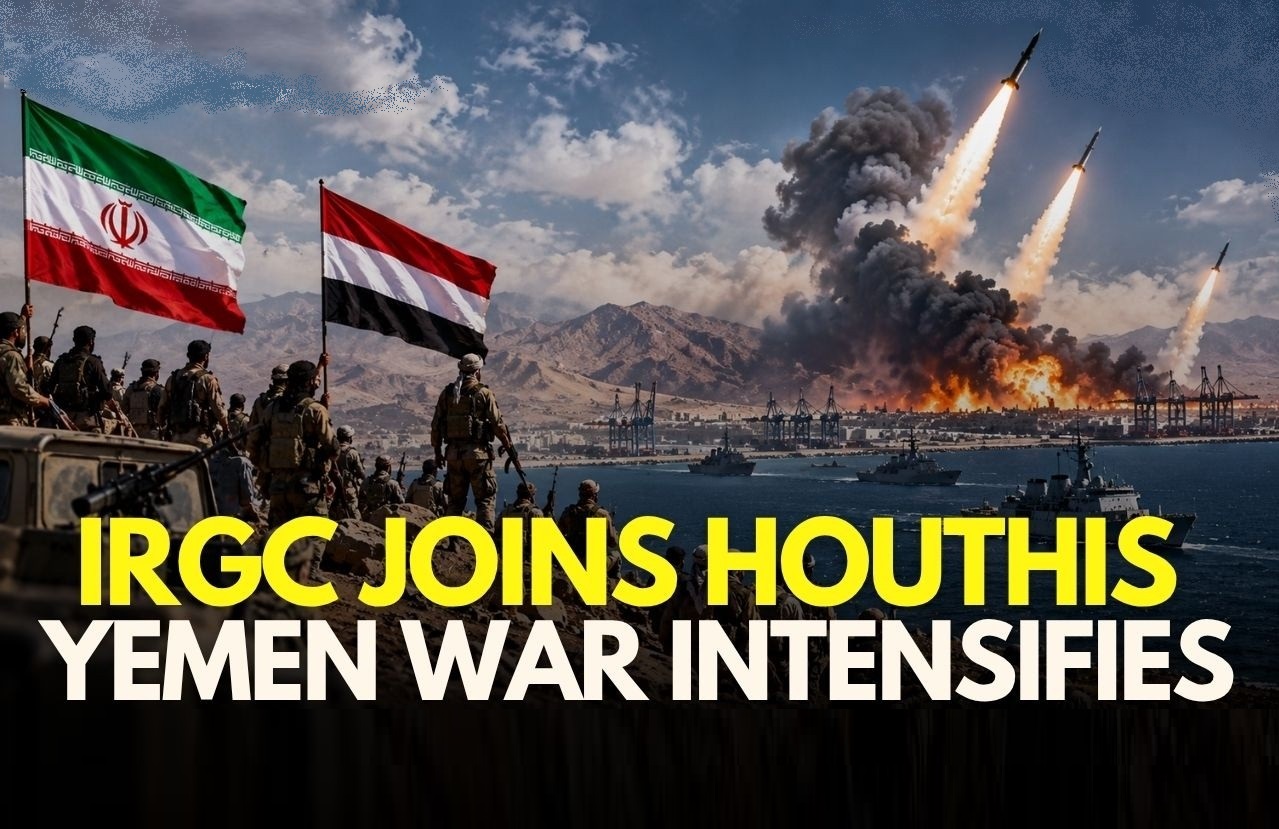
In April 2015, United States National Security Council spokeswoman Bernadette Meehan stated that: "It remains our assessment that Iran does not exert command and control over the Houthis in Yemen". The United States has regularly accused the Iranian government of arming and funding the Houthis. In an April 2015 interview with the PBS Newshour, then-U.S. secretary of state John Kerry accused Iran of attempting to destabilize Yemen. While the Houthis and the Iranian government have denied any military affiliation, Iranian supreme leader Ali Khamenei openly announced his "spiritual" support of the movement in a personal meeting with the Houthi spokesperson Mohammed Abdul Salam in Tehran, in the midst of ongoing conflicts in Aden in 2019.
Although there has been no direct intervention by the Iranian government, the Yemeni civil war is widely regarded as part of the Iran-Saudi proxy conflict. The United States, Saudi Arabia, the UAE and various Western commentators have accused various IRGC networks of assisting Houthis through arms supplies, military training, logistics, strategic co-ordination and media support. Saudi Arabia views activities by the Quds Forces and Hezbollah in neighboring Yemen as part of Iranian attempts to establish a satellite state in the country and trap them into a stalemate.
Western commentators have argued that the Iranian policy in Yemen has been hinged on developing bases for ballistic missiles targeting GCC countries, establishing naval dominance in the strategic Bab al-Mandeb Strait by advancing area denial capabilities and weapons trafficking, in addition to the intensification of Iranian cyberwarfare. However, this characterization has been disputed by various analysts and academics, who assert that Houthis are independent of Iran. According to professor Stephen Zunes, the majority of Houthi arms supplies primarily originate from the black market, and Houthis obtain most of their weaponry from non-Iranian sources.
On 7 August 2018, IRGC commander Nasser Shabani was quoted by the Fars News Agency, the semi-official news agency of the Iranian government, as saying, "We (IRGC) told Yemenis [Houthi rebels] to strike two Saudi oil tankers, and they did it". The Wall Street Journal reported in March 2023 that the Iranian government agreed to halt all military support to Houthis and abide by the UN arms embargo, as part of a Chinese-brokered Iran-Saudi rapprochement deal. The Eritrean government has also been accused of funneling Iranian material to the Houthis, as well as offering medical care for injured Houthi fighters.
However, it has called the allegations "groundless" and said after the outbreak of open hostilities that it views the Yemeni crisis "as an internal matter". According to a secret United Nations document, North Korea had aided the Houthis by selling weapons.
Yemeni government supporters
The Yemeni government meanwhile has enjoyed significant international backing from the United States and Persian Gulf monarchies after requesting their support. U.S. drone strikes were conducted regularly in Yemen during Hadi's presidency in Sanaa, usually targeting Al Qaeda in the Arabian Peninsula. The United States was also a major supplier of weapons to the Yemeni government, although according to the Pentagon, hundreds of millions of dollars' worth of that material has gone missing since it was delivered. Saudi Arabia provided financial aid to Yemen until late 2014, when it suspended it amid the Houthis' takeover of Sanaa and increasing influence over the Yemeni government.
According to Amnesty International, the United Kingdom also supplied weaponry used by Saudi-led coalition to strike targets in Yemen. Amnesty International also says that U.S.-based Raytheon Company supplied a laser-guided bomb that killed six civilians on 28 June 2019. In May 2019, State Secretary Mike Pompeo announced an "emergency" to push through $8.1 billion of arms sales to Gulf allies like Saudi Arabia, the United Arab Emirates, and Jordan, citing Iranian activity in the Middle East. Despite widespread congressional opposition, an August 2020 report by the Office of Inspector General detailed that Pompeo complied with the legal prerequisites to do so.
The report, however, also noted that the possible threat to the lives of the civilians caught in the crossfire was not assessed properly at the time of the emergency. The State Department was also accused in the report of violating the threshold of the Arms Export Control Act while approving arms sales to Gulf states.
2016
In response to rumors that Saudi Arabia could intervene in Yemen, Houthi commander Ali al-Shami boasted on 24 March 2015 that his forces would invade the larger kingdom and not stop at Mecca, but rather Riyadh. The following evening, answering a request by Yemen's internationally recognized government, Saudi Arabia began a military intervention alongside eight other Arab States (United Arab Emirates, Egypt, Jordan, Bahrain, Kuwait, Qatar, Morocco, and Sudan) and Pakistan. The United States also helped attack the Houthis – bombing positions throughout Sanaa. In a joint statement, the nations of the Gulf Cooperation Council (with the exception of Oman) said they decided to intervene against the Houthis in Yemen at the request of Hadi's government.
King Salman of Saudi Arabia declared the Royal Saudi Air Force to be in full control of Yemeni airspace within hours of the operation beginning. The airstrikes were aimed at hindering the Houthis' advance toward Hadi's stronghold in southern Yemen. Al Jazeera reported that Mohammed Ali al-Houthi, a Houthi commander appointed in February as President of the Revolutionary Committee, was injured by an airstrike in Sanaa on the first night of the campaign. After the launch of Operation Decisive Storm, Saudi Arabia along with the UAE used lobbying in an attempt to rally the international community to their cause.
Reuters reported that planes from Egypt, Morocco, Jordan, Sudan, Kuwait, United Arab Emirates, Qatar, and Bahrain had also taken part in the operation. Saudi Arabia requested that Pakistan commit forces as well, but Pakistan's parliament officially voted to remain neutral. However, Pakistan agreed to provide support in line with a United Nations Security Council resolution, dispatching warships to enforce an arms embargo against the Houthis. On 21 April 2015, the bombing campaign was officially declared over, with Saudi officials saying they would begin Operation Restoring Hope as a combination of political, diplomatic, and military efforts to end the war.
Even still, airstrikes continued against Houthi targets, and fighting in Aden and Ad Dali' went on. The United Arab Emirates claimed to take an active role against fighting AQAP and IS-YP presence in Yemen through a partnership with the United States. In an Op-Ed in The Washington Post, Yousef Al Otaiba, the UAE ambassador to the United States, described that the intervention has reduced AQAP presence in Yemen to its weakest point since 2012 with many areas previously under their control liberated.
The ambassador claimed that more than 2,000 militants have been removed from the battlefield, with their controlled areas now having improved security and a better delivered humanitarian and development assistance such as to the port city of Mukalla and other liberated areas. An Associated Press investigation outlined that the military coalition in Yemen actively reduced AQAP in Yemen without military intervention, instead of by offering them deals and even actively recruiting them in the coalition because "they're considered exceptional fighters". UAE Brigadier General Musallam Al Rashidi responded to the accusations by stating that Al Qaeda cannot be reasoned with and citing that they killed many of his soldiers.
The UAE military stated that accusations of allowing AQAP to leave with cash contradict their primary objective of depriving AQAP of its financial strength. The notion of the coalition recruiting or paying AQAP has been thoroughly denied by the United States Pentagon, with spokesperson Robert Manning calling the news source "patently false". The governor of Hadramut Faraj al-Bahsani, dismissed the accusations that Al Qaeda has joined with the coalition ranks, explaining that if they did there would be sleeper cells and that he would be "the first one to be killed". According to The Independent, AQAP activity on social media as well as the number of terror attacks conducted by them has decreased since the Emirati intervention.
On 13 July 2020, the UK Ministry of Defence logged more than 500 Saudi air raids in possible breach of international law in Yemen. These figures were revealed a few days after the UK government decided to resume arms sales to Saudi Arabia, which could be used in the Yemen war, just over a year after the court of appeal ruled them unlawful. It justified resuming arms sales stating that only isolated incidents without any pattern have occurred. In March 2019, the United States Congress voted to end US support to the Saudi war effort; however, US President Donald Trump vetoed it. His successor, President Joe Biden, announced a freeze on arms sales to Saudi Arabia and the UAE in January 2021.
He also declared that he would end American support for the Saudi coalition. On 4 February 2021, Biden announced an end to the US support for Saudi-led operations in Yemen. As of 13 April 2021, arms sales to the UAE had not been stopped, while sales to Saudi Arabia were still paused. However, details of the end of American involvement in the war were not released as of 2021. In August 2020, confidential Saudi documents revealed the kingdom's strategy in Yemen. The 162 pages of classified Saudi documents dated back prior to 2015. The pages showed the kingdom's inaction in stopping the Houthis from capturing Sanaa, despite Saudi intelligence reports.
The records also exposed that Saudi Arabia had worked to hamper the rebuilding projects commissioned by Germany and Qatar in Saada. This happened after the fighting between the two warring camps came to a halt due to a ceasefire.
Arab League
In Egypt, the Yemeni foreign minister called in 2015 for an Arab League military intervention against the Houthis. Egyptian President Abdel Fattah al-Sisi floated the idea of a unified military force. The Arab League announced the formation of a unified military force to respond to conflict in Yemen and Libya in March 2015.
US role
Since the mid-2000s, the United States has been carrying out targeted killings of Al-Qaeda militants in Yemen, although the U.S. government generally does not confirm involvement in specific attacks conducted by unmanned aerial vehicles as a matter of policy. The Bureau of Investigative Journalism documented 415 strikes in Pakistan and Yemen by 2015 since the September 11 attacks, and according to the organization's estimates, between 423 and 962 deaths are believed to have been civilians. Michael Morell, former deputy director of the CIA, claims the numbers were significantly lower. During the civil war in Yemen, drone strikes have continued, targeting suspected leaders of Al Qaeda in the Arabian Peninsula.
Ibrahim al-Rubeish and Nasser bin Ali al-Ansi, two leading AQAP figures, were killed by U.S. drone strikes in the vicinity of Mukalla in 2015. Approximately 240 suspected AQAP militants have been killed by American drone strikes since the civil war began. In 2013, Radhya Al-Mutawakel and Abdelrasheed Al-Faqih, Directors of Mwatana, published a joint report with Open Society Foundations titled 'Death by Drone', detailing evidence of civilian casualties and damage to civilian objects in nine US drone strikes. The United States supplied intelligence and logistical support, including aerial refueling and search and rescue for downed coalition pilots. The US also revived arms sales to coalition countries.
In January 2016, Saudi Arabia's foreign minister stated: US and UK military officials were in the command and control center responsible for the Saudi-led airstrikes in Yemen and had access to the list of targets but were not involved in the selection of targets. In March 2025, the United States launched air and naval attacks against dozens of Houthi targets in Yemen, the largest military operation in the Middle East of United States President Donald Trump's second term. US officials said that the first wave of attacks, launched on 15 March against radars, air defenses, and missile and drone systems, were the first in a wider effort to end Houthi attacks on commercial vessels and warships in the Red Sea and Gulf of Aden.
Islamic State presence and operations
The Islamic State (IS) has proclaimed several provinces in Yemen and has urged its adherents to wage war against the Houthi movement, as well as against Zaydis in general. ISIS militants have conducted bombing attacks in various parts of the country, particularly against mosques in Sanaa. On 6 October 2015, IS militants conducted a series of suicide bombings in Aden that killed 15 soldiers affiliated with the Hadi-led government and the Saudi-led coalition. The attacks were directed against the al-Qasr hotel, which had been a headquarters for pro-Hadi officials, and also military facilities.
Yemeni officials and the UAE state news agency declared that 11 Yemeni and 4 United Arab Emirates soldiers were killed in Aden due to 4 coordinated Islamic State suicide bombings. Prior to the claim of responsibility by the Islamic State, UAE officials blamed the Houthis and former president Ali Abdullah Saleh, for the attacks.
Humanitarian aspects of the war

CNN reported on 8 April 2015 that almost 10,160,000 Yemenis were deprived of water, food, and electricity as a result of the initial year of the conflict. The report also added per source from UNICEF officials in Yemen that within 15 days, some 100,000 people across the country were dislocated, while Oxfam said that more than 10 million Yemenis did not have enough food to eat, in addition to 850,000 half-starved children. Over 13 million civilians were without access to clean water. A medical aid boat brought 2.5 tonnes of medicine to Aden on 8 April 2015. A UNICEF plane loaded with 16 tonnes of supplies landed in Sanaa on 10 April.
The United Nations announced on 19 April 2015 that Saudi Arabia promised to provide $273.7 million in emergency humanitarian aid to Yemen. The UN appealed for aid, saying 7.5 million people had been affected by the conflict and many were in need of medical supplies, potable water, food, shelter, and other forms of support. On 12 May 2015, Oxfam warned that the five days a humanitarian ceasefire was scheduled to last would not be sufficient to fully address Yemen's humanitarian crisis. It was also said that the Houthis were collecting a war tax on goods. The political analyst Abdulghani al-Iryani affirmed that this tax is: "an illegal levy, mostly extortion that is not determined by the law and the amount is at the discretion of the field commanders".
As the war dragged on through the summer and into the fall of 2015, Cyclone Chapala, the equivalent of a category 2 Hurricane, made landfall on 3 November 2015. According to the NGO Save the Children, the destruction of healthcare facilities and a healthcare system on the brink of collapse as a result of the war could cause an estimated 10,000 preventable child deaths annually. Some 1,219 children died as a direct result of the conflict by December 2016 according to Edward Santiago, the NGO's Yemen director. Even before the war tens of thousands of Yemeni children were dying of preventable causes.
But now, the situation is much worse and an estimated 1,000 children are dying every week from preventable killers like diarrhea, malnutrition, and respiratory tract infections. In March 2017, the World Food Program reported that while Yemen was not yet in a full-blown famine, 60% of Yemenis, or 17 million people, were in "crisis" or "emergency" food situations. In June 2017, a cholera epidemic resurfaced which was reported to be killing a person an hour in Yemen by mid June. News reports in mid June stated that there had been 124,000 cases and 900 deaths and that 20 of the 22 provinces in Yemen were affected at that time. UNICEF and WHO estimated that, by 24 June 2017, the total cases in the country exceeded 200,000, with 1,300 deaths.
77.7% of cholera cases (339,061 of 436,625) and 80.7% of deaths from cholera (1,545 of 1,915) occurred in Houthi-controlled governorates, compared to 15.4% of cases and 10.4% of deaths in government-controlled governorates, since Houthi-controlled areas have been disproportionately affected by the conflict, which has created conditions conducive to the spread of cholera. On 7 June 2018, the International Committee of the Red Cross (ICRC) pulled 71 of its international staff out of Yemen, and moved the rest of them to Djibouti, with some 450 ICRC employees remaining in the country. The partial evacuation measure came on the eve of an ICRC worker, a Lebanese national, being killed on 21 April by unknown gunmen in the southwestern city of Taiz.
The ICRC stated, "our current activities have been blocked, threatened and directly targeted in recent weeks, and we see a vigorous attempt to instrumentalize our organization as a pawn in the conflict." In light of the serious security deterioration for ICRC personnel, the international organization has called for all parties of the conflict "to provide it with concrete, solid and actionable guarantees so that it can continue working in Yemen." Al Jazeera reported that more than 10,000 people had been killed and at least 40,000 wounded since the beginning of the conflict, mostly from air raids. The International Rescue Committee stated in March 2019 that at least 9.8 million people in Yemen were acutely in need of health services.
The closure of Sanaa and Riyan airports for civilian flights and the limited operation of civilian airplanes in government-held areas, made it impossible for most to seek medical treatment abroad. The cost of tickets provided by Yemenia, Air Djibouti and Queen Bilqis Airways, also put traveling outside Yemen out of reach for many. The United Nations Development Programme published a report in September 2019 that said if the war continued, Yemen would become the poorest country in the world, with 79% of the population living below the poverty line and 65% in extreme poverty by 2022.
On 3 December 2019, the International Day of Persons with Disabilities, Amnesty International released a report highlighting how the almost 5-year old Yemeni civil war had left millions of people living with disabilities and excluded from medical attention. Amnesty claimed that the armed conflict was led by Saudi Arabia and UAE as part of the former's coalition in the Arab nation against Houthis and terror groups, had given birth to the worst humanitarian crisis, as stated by the United Nations. Humanitarian aid provided to Houthi-controlled Yemen was scaled-down in March 2020 because donors doubt if it's actually reaching the people in need, a UN official said.
In June 2020, the UNHCR said that following more than five years of war in Yemen, more than 3.6 million people had been forced to flee their homes, while 24 million were in dire need of aid. The group also informed that a significant gap in funding has been recorded with only US63𝑚𝑖𝑙𝑙𝑖𝑜𝑛𝑟𝑒𝑐𝑒𝑖𝑣𝑒𝑑𝑡ℎ𝑢𝑠𝑓𝑎𝑟, 𝑤ℎ𝑖𝑙𝑒𝑎𝑡𝑙𝑒𝑎𝑠𝑡𝑈𝑆211.9 million is needed to run operations in 2020. On 2 July 2020, Human Rights Watch reported that detainees at Aden's Bir Ahmed facility were facing serious health risks from the rapidly spreading coronavirus pandemic. The informal detention facility, controlled by Yemeni authorities affiliated with the UAE-backed Southern Transitional Council, is grossly overcrowded and was deprived of health care facilities.
The World Food Programme (WFP) projected in March 2021 that if the Saudi-led blockade and war continues, more than 400,000 Yemeni children under 5 years old could die from acute malnutrition before the end of the year as the blockade devastates the nation.
Women in Yemen
Women in Yemen suffer from gender-based discrimination due to the highly patriarchal character of Yemeni society. Although the government of Yemen has made efforts to improve the rights of women (including the formation of a Women's Development Strategy and a Women Health Development Strategy), many cultural and religious norms stand in the way of equal rights for women. Poor enforcement of the legislation by the Yemeni government exacerbates the problem. As of 2017, Yemeni women do not hold many economic, social or cultural rights.
While suffrage was gained in 1967 and constitutional and legal protection was extended to women during the first years of Yemen unity between 1990 and 1994, they continue to struggle "in exercising their full political and civil rights". On the other hand, women played major roles in Yemeni society in earlier times. Some women of pre-Islamic and early Islamic Yemen held elite status. The Queen of Sheba has been hailed as a "source of pride for the Yemeni nation". In addition, Queen Arwa has been noted for building up the country and promoting greater prosperity under her rule. In modern day Yemen, women are subject to tribal and patriarchal traditions that keep them from advancing.
Combined with illiteracy and poverty, this has led to women in Yemen being deprived of their rights as citizens. Due to the ongoing armed conflict in Yemen since the end of March 2015, Yemen is undergoing a humanitarian crisis. The conflict has brought numerous accusations of violations and abuses of international human rights law and violations of international humanitarian law. The events have been brutal, and have had cruel consequences on all civilians, but especially on the lives of women and young girls. Due to the tension and chaos of the crisis, combined with the deep-rooted gender inequality, conditions for women and girls in Yemen are deteriorating as the conflict drags on.
Women and girls have been left vulnerable to inhumane violence, physical and psychological abuse and exploitation.
Women's rights in the People's Democratic Republic of Yemen (South Yemen: 1967–1990)
Following the eviction of British colonial forces in November 1967, the leadership of Yemen's revolutionary National Liberation Front (NLF) installed a progressive Marxist government based in Aden, the former seat of colonial power in South Yemen. Women had been involved in the revolution as both political and military operatives, and this involvement contributed to the standing of women in the PDRY. At the outset of the post-colonial period, the NLF leadership recognized pervasive gender discrimination as a serious handicap which would invariably hinder the progressive development of an egalitarian society.
The 1970 constitution of the PDRY guaranteed that: It shall work for the widest participation of Yemeni women in economic, social and political life and the raising of their educational, cultural, vocational, and technical capabilities. It shall struggle vigorously for the purpose of affirming and protecting the rights guaranteed to women by the constitution and the laws on the basis of parity with men. Women were also granted the right to vote immediately following independence from Great Britain in 1967. In practice however, women remained chronically underrepresented in the PDRY government; the first woman to serve in parliament was in 1990. Nevertheless, these developments represented a remarkable step forward for women residing in South Yemen.
In fact, these rights extended into the private sphere, in particular regarding the regulation of marriage. For example, the 1974 Family Law outlines marriage as "a contract between a man and a woman, equal in rights and responsibilities, made on the basis of mutual understanding and respect." Helen Lackner points out that "Along with the Tunisian Family Code, this law is the most progressive to be found in any Arab state." Such laws provided the legal infrastructure necessary to promote a revolutionary reorganization of society in accordance with the fundamental principle of gender equality, and social egalitarianism more generally.
Furthermore, the P.D.R.Y. attempted to mobilize women in rural areas through the creation of the General Union of Yemeni Women, which was responsible for protecting and promoting the interests of women. The women's union provided literacy courses and vocational training, while in a broader sense setting an example for society that women can and "should be encouraged to participate fully and equally in society." Women interviewed in 2010 and 2018 about how conditions had changed since unification in 1990 said that the PDRY was a better time for women.
Access to justice
While Article 40 and 41 of the 1990 unification constitution of Yemen stipulates that all citizens are considered equal before the law and that "Every citizen has the right to participate in the political, economic, social and cultural life of the country" gender discrimination is prevalent in Yemen. The addition of Article 31 to the constitution, contradicts article 40 by stating that "Women are the sisters of men... they have rights and duties, which are guaranteed and assigned by Shari'a and stipulated by law" has seemingly nullified the equality extended by the constitution due to its use as a base for discriminatory laws. This is due to the specific reading of Shari'a, which restricts the rights of women.
Today, many Yemeni activist women believe that Shari'a can be interpreted to further include women in the social, political, economic, and cultural life of the country. Many of the discriminatory policies restrict familial rights of women. Women in Yemen cannot marry a non-Yemeni without approval from both her family and the state. Further, under the Nationality Law of 1990, Yemeni women cannot pass their citizenship onto their children unless the woman divorces her husband, her husband is found to be insane or her husband dies, in which case the children can gain citizenship when they turn 19. The children of Yemeni men married to foreigners, on the other hand, are ensured Yemeni citizenship.
Further, divorce and even testimony of women is not equal to that of Yemeni men. Yemeni men have the right to divorce their wives at any time without justification, a woman on the other hand must go through a process of litigation in which they justify their reason for nullifying the marriage contract. Before the court, a woman is considered only half a person, that is it takes "the testimony of two women" to equal "the testimony of one man." Additionally, women are prohibited from testifying in cases of adultery, slander, theft or sodomy by Article 45 (21) of the 1992 Evidence Law. Other laws that discriminate against women are: Personal Status Law (1992) and Penal Code Law (1994).
The Personal Status Law contravenes parts of the Convention on Eliminating All Forms of Discrimination Against Women (CEDAW), by stating that women are required to provide sexual access to her husband, basically permitting rape within a marriage. Likewise, provisions in the Penal Code increase the vulnerability of women to violence. Article 232 of the Penal Code allows for reduced and lenient sentences of men convicted of so-called "honour killing". Under Yemeni law murder is punishable by death, however the Penal Code imposes a maximum prison sentence of only one year in cases of "honour killings".
Gender-based violence
There are a number of forms of violence that women in Yemen are exposed to, and these include: physical and psychological abuse from family members, forced marriage, sexual harassment, forced pregnancy, rape, polygamy, health services deprivation and female genital mutilation/cutting (FGM/C). Forced marriage and FGM/C are considered part of culture and tradition, and therefore they are not viewed as a form of violence in Yemen. In fact, 94% of FGM/C is not done by certified medical doctors, due to ministerial decree issued by the Minister of Health that bans FGM/C in the official centers; as a result, FGM/C has been conducted in the homes.
FGM/C is done as a result of cultural practices, lack of knowledge of the risk connected with this harmful procedure, and law of prohibiting this behaviour. Within Yemeni society, there is a strong preference for male children, as well as a high tolerance of violent behaviour towards females. Thus, female children are often disciplined and punished, if they challenge this behaviour, and attempt to defend themselves. These practices do not only take place inside the homes, but also in schools, social institutes and workplaces. National and local media in fact, often encourage and reinforce the tendency for such discriminating acts and behaviour. The most vulnerable group of women exposed to violence in Yemen is marginalized, poor and rural women.
While conditions of poverty tend to intensify forms of instances of violence against women, rural women are also forced to carry out most agricultural work and physical labour. In 2022 Huda Ali Alawi, Director of the Women Research and Training Center at Aden University, reported that the Yemeni Civil War had driven an increase of gender-based violence in Yemen.
Discriminatory laws
Women in Yemen are also subjected to violence through the institutionalization of discriminatory laws. Article 42 of the Crimes and Punishment Law No 12 (1994) amounts a woman's blood money (diya) as half of a man's, effectively devaluing the female's life to half as much as a man's. In the incident of unintended killing, law identifies a compensation for killing a male, of one million Yemeni Rial (YR), which is around US 5, 000. 𝐻𝑜𝑤𝑒𝑣𝑒𝑟, 𝑓𝑒𝑚𝑎𝑙𝑒𝑣𝑖𝑐𝑡𝑖𝑚𝑠'𝑓𝑎𝑚𝑖𝑙𝑖𝑒𝑠𝑎𝑟𝑒𝑐𝑜𝑚𝑝𝑒𝑛𝑠𝑎𝑡𝑒𝑑ℎ𝑎𝑙𝑓𝑡ℎ𝑎𝑡𝑎𝑚𝑜𝑢𝑛𝑡𝑤𝑖𝑡ℎ𝑜𝑛𝑙𝑦500, 000𝑌𝑅, 𝑤ℎ𝑖𝑐ℎ𝑖𝑠𝑈𝑆2,500. Amendments to other laws in the late 1990s further lowered the status of Yemeni women.
For example, in the 1992 version of the Personal Status Law, the minimum age for marriage was 15, however, in the 1998 amendment, the wording was replaced with general terms, which ultimately amounted to the legalisation of marriage contracts for minors. Under Article No. 15 of the current Personal Status law, it is stated that marriage to a "little girl" is valid, unless she is not ready for sex. What the article is conveying, is that girls under 15, may be forced to marry, if they are ready to engage in sexual relations. On that, the law disregards the fact that, despite the physical and psychological capability to engage in sexual relations, decision to do so should be a personal one, and should depend on the wishes of each individual woman.
Personal Status Law also enables marital rape and domestic violence. For example, Article 40 as revised in 1998, provides that a woman must be obedient to her husband. In doing so, Article 40 does not allow a woman to leave her home without her husband's permission. The husband is also allowed to have sexual relations with his wife, whenever he pleases, and she should allow that in return.
Human rights
The international community has recognized that violence against women is a violation of women's human rights, their bodily integrity, and their sexual and reproductive rights. It is also acknowledged that promotion of women's rights is a means to ensure sustainable development. The Convention on the Elimination of All Forms of Discrimination Against Women (CEDAW) 1979 imposes legally binding duties to eliminate discrimination against women and ensure equality between women and men. Allegations of violence and sexual abuse in Yemen have been reported by the Office of the United Nations High Commissioner for Human Rights (OHCHR).
In July 2015, OHCHR visited Thawra hospital in Sana'a reported on alleged cases of rape inflicted on internally displaced persons. In February 2016, an OHCHR monitor visited the women's central prison in Sana'a, where four victims reported that they had been blindfolded during their capture and subjected to electric shocks.
Political rights
Women in Yemen have always had limited participation in society, as men are considered the primary decision makers both inside and outside the household. Thus, women have always been grossly underrepresented in Yemeni politics. This has not, however, prevented women from trying to make their voices heard through strikes and peaceful protests. Some progress has been made since 2011, as the 2011 Uprising challenged the norm of women's limited participation. Women were at the heart of protests, demanding and protesting for a better political life. Then in 2014, women represented more than one quarter of the participants in the National Dialogue Conference (NDC).
Through that, women of Yemen achieved important agreements, including the 30% quota for women's political participation. During the NDC, many women delegates were publicly threatened for participating and were even physically attacked on the streets. To support the women and their movements, several women's human rights organisations, such as the Sisters Arab Forum for Human Rights, increased their efforts and encouraged women to continue participating and fighting for the issues they were passionate about. The international community applauded the positive outcomes of the NDC process as this was a very significant change for women's participation in the Yemeni politics, in comparison to the previous years.
In fact, in 2008 an attempt was made to introduce 15% quota for women in parliament, however this process was abandoned, after Islamic clerics and tribal chiefs intervened and held a "Meeting for Protecting Virtue and Fighting Vice", proclaiming that a woman's place is at home. In the former national parliament, women held only 0.3% of the seats. Despite the achievements made in 2014 by the NDC, women's political participation has been suspended as a result of the current ongoing conflict. Amat al-Aleem al-Asbahi, a Taiz female literacy activist, was assassinated on 25 December 2016.
Education rights
Men and women do not have the same rights for education in Yemen. The country is still a long way from achieving gender equality, despite Article 54 of the Constitution of the Republic of Yemen, which states: Education is a right for all citizens. The state shall guarantee education in accordance with the law through building various schools and cultural and educational institutions. Basic education is obligatory. The state shall do its best to obliterate illiteracy and give special care to expanding technical and vocational education.
The state shall give special attention to young people and protect them against perversions, provide them with religious, mental and physical education, and the appropriate environment to develop their aptitude in all fields. According to a survey done by UNICEF in 2013, girls are 50% less likely to enroll in school compared to boys, and they are also less likely to complete basic secondary and post-secondary education. Other studies have found that girls are usually more likely to drop out of school, than boys. For example, a study done in 2014 by Yemeni Ministry of Education, found that girls are 17% more likely to drop out of school at the primary school level, while 23% more likely than boys to drop out of school by the lower secondary level.
Human Rights Watch has documented that forced child marriage is a leading factor as to why girls drop out of school. In the Demographic and Health Survey of 2013, it was discovered that only 6% of women had continued their education post-secondary school, while a survey done by UNICEF found that 71% of schools do not have female teachers. Due to the high percentage drop-out, women have lower literacy rate than men. According to the 2013 Global Gender Gap, only 49% of women in Yemen are literate, in contrast to 82% of men being literate. Young girls and women aged 15-25 have a higher literary rate, estimated at 76.9% showing improvement among younger generations compared to past ones.
Economic rights
In the World Economic Forum's 2014 Gender Gap Report, out of the 142 countries included in the report, Yemen ranked last, and has continued to do so since 2007. While women have the legal rights to ownership and use of property, many women in Yemen give administrative rights to male members of their family because they are not aware of their rights. This has been attributed to "widespread illiteracy, patriarchal attitudes, and women's ignorance of their economic rights". In 2003, it was estimated that only 30% of the Yemeni female population was literate.
As Elhum Haghight-Sordellini points out, growth of the economy "can create a powerful need to bring women into the labor force", however, Yemen's "lack of economic growth and dependency on more developed nations" and more general instability can "prevent social change". Economic issues are made worse in Yemen by "jobless growth in the face of a rising population". Today, 41.8% of Yemen's population lives below the National Poverty line, many of them women. (undmg Yemen). This may be attributed to the large education gap between men and women in Yemen, as well as prevalent and illegal discrimination in the workforce against women. Freedom House reported that while 73% of boys were enrolled in primary school in rural areas, only 30% of girls enrolled.
Though the 1995 Labor Law prohibits workplace discrimination based on gender, it is not enforced in practice, therefore greatly limiting opportunities for women. While Yemeni women are not prohibited to work, there are other barriers that make it difficult for them to seek employment. Firstly, as mentioned above, women lack in education. Secondly, the Personal Status Law does not allow a woman to leave the house, unless with permission from her husband, and thirdly, culturally, Yemeni women are expected to stay home and take care of the children, so that denies them access to employment opportunities. For these reasons and more, in 2013 the World Economic Forum reported that the female unemployment was 41%, compared to the men's which was only 12%.
Nobel Prize
Yemeni women's rights activist Tawakul Karman, founder and chair of Women Journalists Without Chains (WJWC), was one of three recipients of the 2011 Nobel Peace Prize. As one Al Jazeera article points out, the awards serve as "an accolade for the entire Arab Spring" as well as a recognition of "women power in the advent of the Arab Spring". The Nobel committee stated that Karman was specifically awarded the prize because of her "non-violent struggle for the safety of women". ("Profile: Tawakul Karman" Al Jazeera) Since 2007, Karman has organized and led demonstrations and sit-ins on numerous occasions with numerous Yemeni women intent on gaining more equality.


Social and cultural rights
Yemen is a society with the cultural attitude, that women have a low status in the family, as well as in the community. A man is allowed to marry up to four wives as long as he has the financial means, however a woman is not even entitled to enter marriage under her own free will, as she needs the approval and agreement of a male guardian. In case of divorce, children can be removed from the mother's care, while the father does not face such risks of losing his children. A woman is also not allowed to deny visitation rights for the father, while the father is allowed to do so under Article 145 of the Personal Status Act. Health and reproductive rights are also major issues for Yemeni women.
No legislation protects their freedom to make their own decisions with regards to these issues and thus women are controlled by their family or, if married, by their husbands. Further, Yemen is a country where female genital mutilation (FGM) remains an issue, even after being banned by the Ministry of Public Health and Population. In addition, many women are forced to marry at a young age, made possible by state policies, which gives the family the control over whether or not a girl marries and when. Child marriage is a problem with a report of 52% of Yemeni girls getting married before the age of 18, including 14% before the age of 15. With the recent conflict, this trend has reportedly increased.
Many families have used it as a coping mechanism during the ongoing crisis, and as a way of accessing dowry payments. The common practice of forcing young girls to marry was condemned by an NGO as "child rape condoned under the guise of marriage." Yemen has a tribal culture, and the marriage of young girls is common; most Yemeni girls are married before they reach puberty. A proposed law setting a minimum age for marriage of 17 for women was opposed by conservative Yemenis, including women.